
In the Makeup world
Everyone in the beauty industry knows that to look good, a smooth face is required. And that smooth, flawless look does not come from applying foundation; rather, it is achieved through using a good face primer. Not many understand this concept, and without the proper face primer, it does become much harder to maintain that airbrushed look, which works beautifully for different types of makeup.
This will serve as a guide for all those who don’t know the answer to the most common questions asked – ‘what is face primer?” or “what does it do for your face?”. In here, we explain what face primer is, best ways to apply it, different varieties of it, and what other benefits one can have from it.
What Is Face Primer?
Commonly used in Makeup, face primer is simply the base product that is put on either skin, foundation, or other makeup. It applies a smoother surface, which in turn makes the makeup last longer. It aids in the easier application of foundation or other makeup and preps the base or skin, which allows the person to effortlessly achieve the airbrushed look.
What Does a Primer Do for Your Face?
Here’s what a face primer actually does:
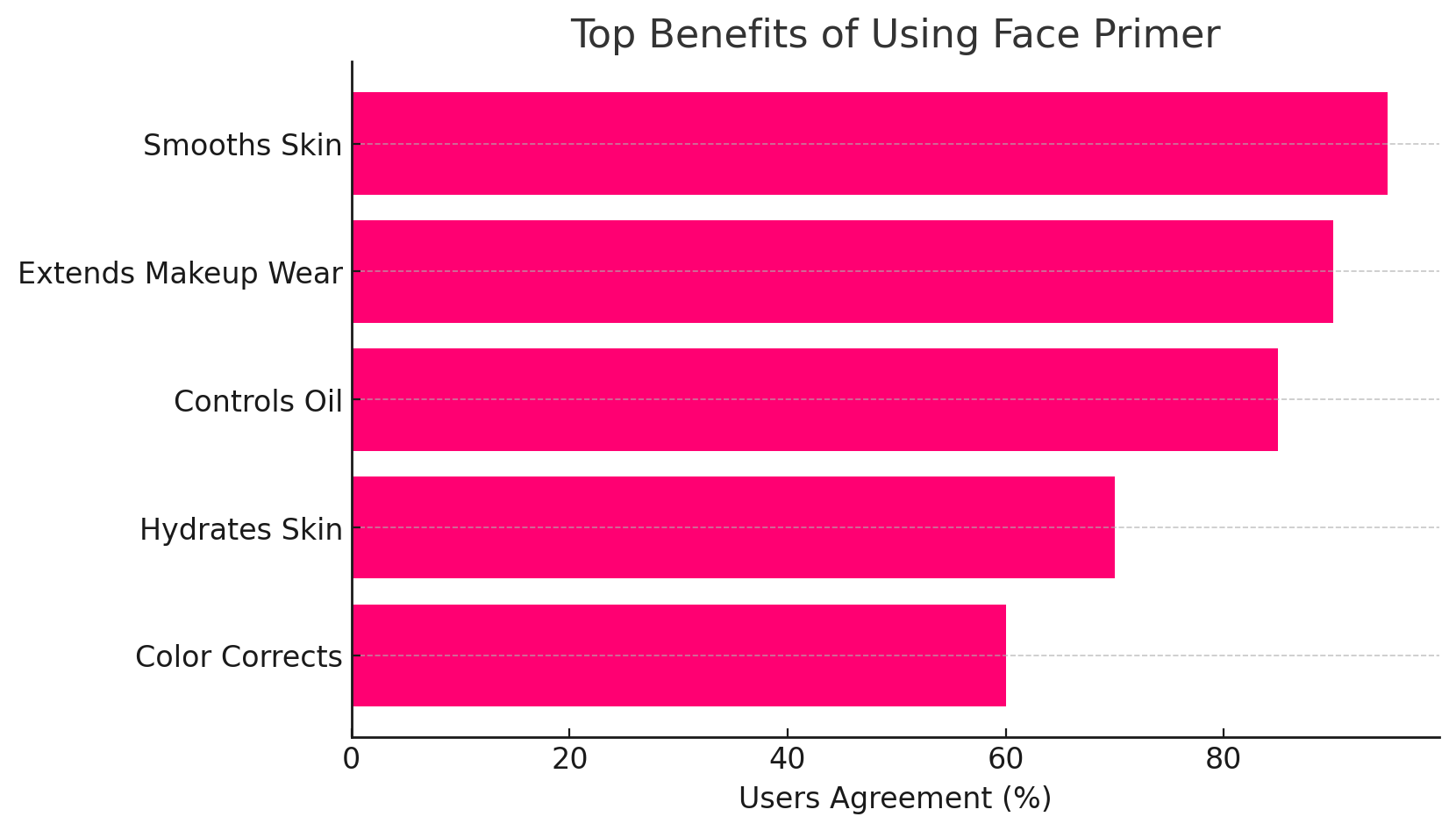
| Benefit | How It Helps |
| Smoothens Skin Texture | Fills in fine lines, pores, and uneven texture. |
| Enhances Makeup Longevity | Keeps makeup fresh for longer hours. |
| Controls Oil and Shine | Some primers mattify oily skin, preventing midday shine. |
| Hydrates or Corrects Tone | Specialized primers can hydrate dry skin or color-correct redness and dullness. |
Fact:
According to a survey by Statista, about 32% of makeup users use a primer to improve makeup longevity.
How Does Makeup Primer Work?
Primers often include silicones such as dimethicone, which form a protective layer on your skin before applying makeup. This layer smooths out blemishes and stops oils or perspiration from destroying your foundation.
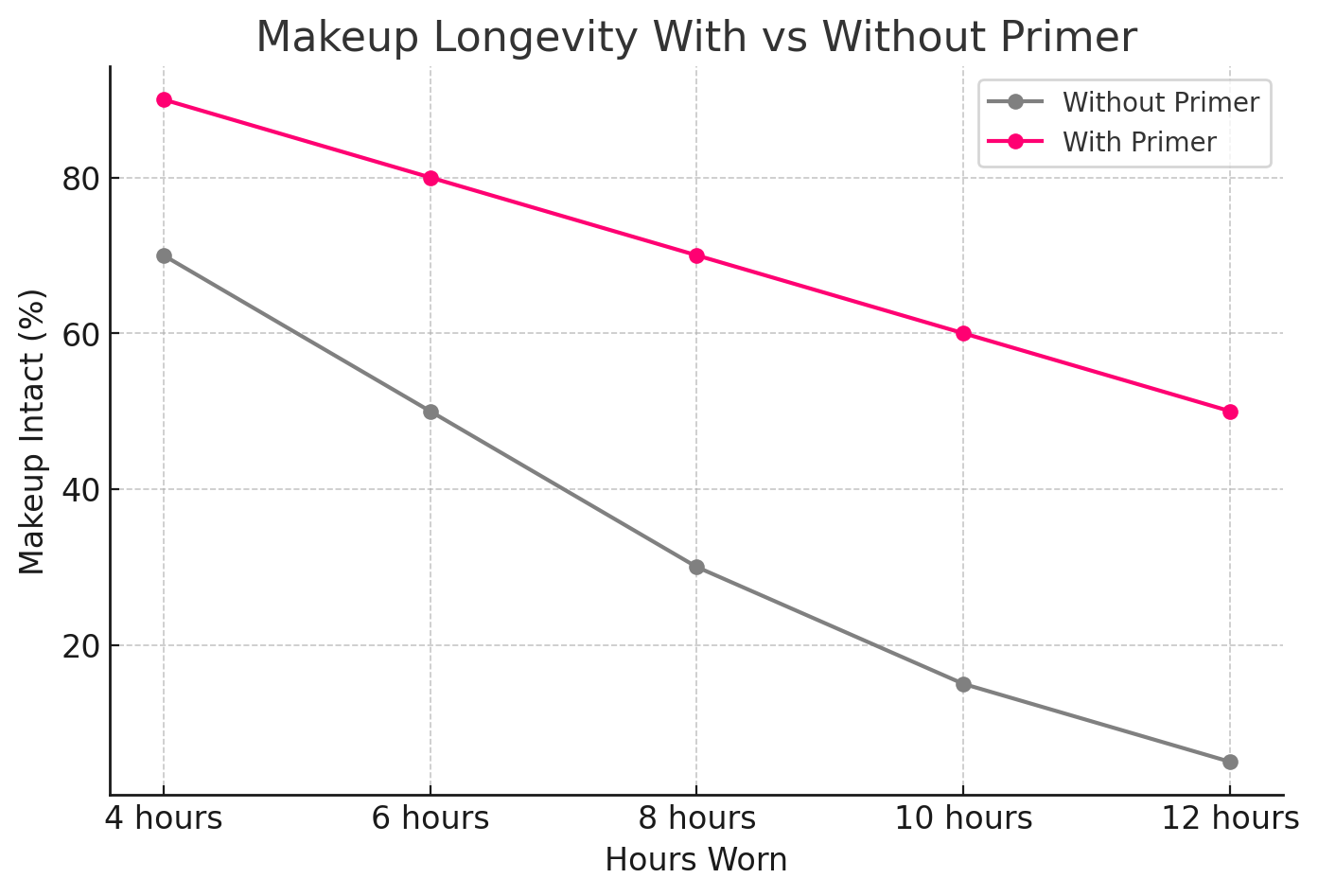
Graph: How Primer Affects Makeup Longevity
The below graph shows how primer affects makeup over 12 hours
| Without Primer | With Primer |
| 4-hour wear – fading starts | 8-hour wear – still intact |
| 6-hour wear – patchy spots | 10-hour wear – slight fading |
| 8-hour wear – major breakdown | 12-hour wear – makeup holds up |
When and How to Apply Primer
When to Apply Primer:
After the moisturizer has completely soaked in, apply the primer before the foundation as well as the rest of the makeup designed for the face.
How to Use Primer Step-by-Step:
- Clean the Face: Use water along with soap, pat dry with a cloth, and skin must be left dry only to be damp.
- Moisturize First: Always use moisturizer before primer unless using a “primer and moisturizer in one.”
- Dispense a Small Portion: Pour out the amount approximately equal to that of the green pea. (Answer: Very little).
- Warm Up: It must be rubbed by hand which will help it to be warm.
- Gently Spread: Use fingers but the tip only, working pore patches or uneven textures of the skin.
- Relax and Let It Set: Wait 1–2 minutes before moving to the foundation.
Common FAQs Answered:
- Do you put primer on before or after moisturizer? → After moisturizer.
- What goes first, primer or moisturizer? → Moisturizer first, primer second.
Different Types of Primers
Choosing the right primer depends on your skin type and makeup needs.
| Type of Primer | Best For | Key Features |
| Gel Primer | Oily or combination skin | Lightweight, mattifying |
| Cream Primer | Dry or mature skin | Hydrating, plumping |
| Pore-filling Primer | Large pores | Smoothens texture |
| Color-correcting Primer | Redness, dullness | Evens skin tone |
| Illuminating Primer | Dull or dry skin | Adds radiance |
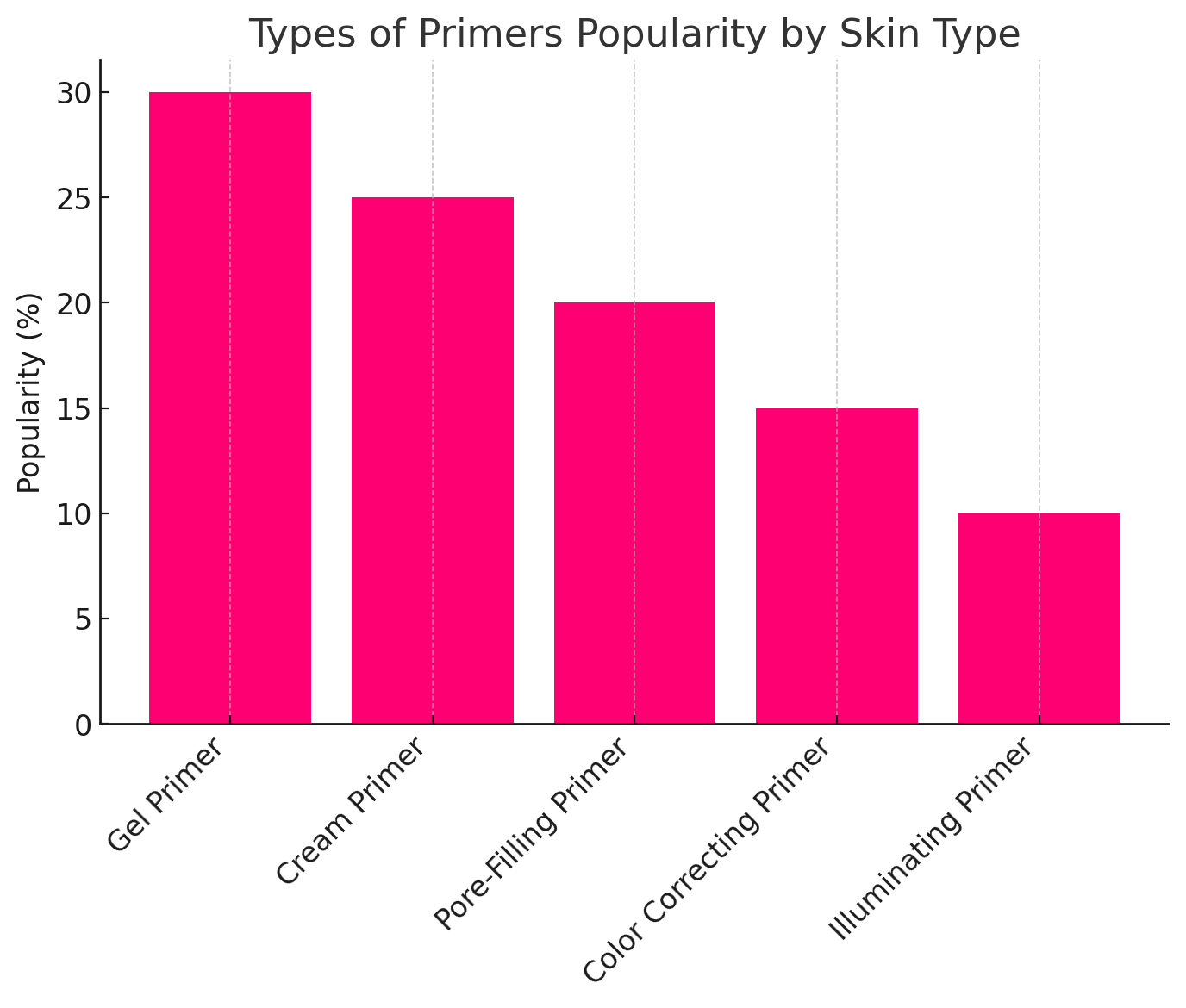
Graph: Types of Primers Popularity by Skin Type
The below graph shows which primer types are most preferred.
Primer and Skincare: Can Primer Double as Skincare?
Is primer good for your skin?
Nowadays, some primers include skincare components such as SPF, hyaluronic acid, niacinamide, and even antioxidants.
| Primer Feature | Skincare Benefit |
| SPF-infused primers | Protect against UV damage |
| Hydrating primers | Boost moisture retention |
| Anti-aging primers | Smooth fine lines |
Can primer be used as skincare?
Not in the strictest sense. While primer aids cosmetic application, it does not act as skincare. Always start with a full skincare regimen
Primer and Moisturizer Combos
What about “Primer and Moisturizer in One” products?
These products offer hydration while also acting as prep for makeup application, perfect for low-maintenance days or no-makeup days when only a splash of color is desired.
- Best for those with dry or sensitive skin.
- A time-saver in the makeup prep routine.
- However, oil control may not be on par with dedicated primers.
Common Primer Myths Debunked
- Myth 1: Primer is only for oily skin.
➔ Reality: A range of hydrating primers is also available!
- Myth 2: Primer clogs pores.
➔ Reality: Primers that are labelled non-comedogenic have undergone testing and are safe.
- Myth 3: You don’t need a primer with a good foundation.
➔ Reality: The use of primer provides a drastic improvement in the overall functionality of the foundation.
How to Pick the Right Primer for You
The selection of a primer is determined by:
- Personal skin type (oily, dry, combination, sensitive)
- Specific skin issues (pores, redness, dryness, dullness)
- Desired makeup trends (matte, dewy, natural)
| Skin Type | Best Primer |
| Oily Skin | Gel-based mattifying primer |
| Dry Skin | Hydrating cream primer |
| Combo Skin | Lightweight gel-cream primer |
| Sensitive Skin | Fragrance-free soothing primer |
| Aging Skin | Smoothing anti-aging primer |
Primer Usage vs. No Primer Usage (Average Makeup Wear Time)

| Product | Wear Time Without Primer | Wear Time With Primer |
| Foundation Only | 4–6 hours | 8–12 hours |
| Concealer Only | 3–5 hours | 7–10 hours |
| Full Face Makeup | 5–7 hours | 10–14 hours |
FAQs About Face Primer
- Can I use face primer every day?
Certainly! You can incorporate it into your daily routine as long as you have a face primer that is not heavy and non-comedogenic. Moreover, make sure to avoid sensitive skin and acne problems.
- Can I use coconut oil as a primer?
While some people enjoy using coconut oil to achieve a dewy look, this does not apply to everyone. Because it is a face oil, coconut oil can cause clogging of pores which will result to breakouts. A dedicated face primer is designed to prepare the skin without causing problems.
- Can I sleep with a primer on?
No! Like any makeup primers left on while sleeping will encourage dirt and oil to build up, leading to clogged pores; sleep doesn’t do your skin any favor. Before bed, cleanse your skin thoroughly to ensure you have a clear canvas for restful slumber.
- Does primer brighten skin?
Some face primers have skin-brightening effects. You need to look out for illuminating and radiance pausing face primers as certain formulations are designed to enhance skin glow and vigor, before the use of foundation.
- Is primer good to wear by itself?
Sure! Most blurring or hydrating primers can be used by themselves as they offer a natural, polished finish that simulates the effects of foundation. Primer minimizes the skin’s imperfections and gives a fresh, renewed appearance.
- Can primer be used as a moisturizer?
In most cases, primer is not intended to be used in place of a moisturizer. That said, there are products labelled “moisturizer and primer in one”, which hydrate and prepare the skin for makeup simultaneously. Be sure to assess your skin’s hydration needs before omitting a moisturizer.
- How much primer do I need for my face?
For full coverage of the face, you require a pea-sized amount of primer. Applying excess primer makes it harder for makeup to adhere properly, which could result in the makeup sliding off instead of being held in place.
- What is a gel primer good for?
Those with combination or oily skin do well with gel primers. These products create a lightweight and breathable layer on the skin, which helps absorb excess shine while maintaining a matte and fresh appearance all day long.
- Can I use primer as skincare?
While primer can improve the appearance of one’s skin significantly, it should not be treated as a substitute for skincare products. Always follow a proper skincare regimen consisting of cleansing and moisturizing along with sun protection before applying makeup primer.
- When should I apply a primer in my makeup routine?
You should use primer after the moisturizer is completely absorbed and prior to putting on foundation or any other makeup. This guarantees that makeup is locked into place all day.
Conclusion: Why Face Primer Deserves a Spot in Your Makeup Routine
Face primer should not be treated as an optional step because it can be a difference-maker for makeup lovers. If you desire a more resilient foundation, smoother skin, or an overall healthy, radiant look, there is a correct face primer for you, and your makeup will be amplified.
With all the information provided, including how to use face primer, what a face primer does to you, and how to choose the suitable face primer for your skin type, claim your place as a makeup master now.